Showing posts with label overrated books. Show all posts

Sep 27, 2010

Overrated books part 3

An atheist once told me that he felt religion was a personal matter and no one should hold your spiritual matters against you. Wise words I felt and I've never forgotten them.

I had what one may call a 'crisis of faith' for a long period of time after reading the scriptures for the third time. Years ago someone gave me a copy of 'The Case for Christ' by Lee Strobel to help answer questions I had about the gospel record. Before that I found the evidence to corroborate the New Testament writers to be sorely lacking and I questioned if Jesus even existed as a historical person much less a spiritual one. In her handing me this book I imagine it was to answer my queries and to be more secure in my walk with God.

Lee Strobel is a legal journalist who attempts to make the case that the gospel records are accurate and are corroborated by historical evidence. He claimed to be a skeptic at the time of his investigation, but early into the book he states otherwise. I'm not sure which is true.

Strobel interviews many apologetic scholars about the biblical accounts, but he never once sits down to talk with anyone who doesn't fit his world view. There are no secular historians or anything of the like. Early in the book you'll find him speaking to experts who claim the gospel authors are at best anonymous, which raises a red flag about his theory that it's all true. We know Mark, the first writer, was written at least 40 years after Christ's death, because he mentions the destruction of the second Jewish temple, and quite possibly couldn't have been around to witness the events, but he fails to mention any of this.

He goes on to give all sorts of anecdotal evidence of Christ's accounts, but no where does he find a contemporary who documented any of his events such as birth, Sermon on the Mount, miraculous healings, crucifixion, or resurrection. None of his experts bring forth any evidence of the slaughter of the innocents by Herod, which one would assume would be somewhere in the historical record.

All of his interviews lead nowhere but to assume the testimony of Christ's existence is heresay. This would never hold up in court, but Strobel thinks otherwise for reasons I don't understand. Is he lying to his readers? I mean he knows a judge would never allow a defense to not cross examine a claim, but the author seems to believe that shouldn't matter. He never interviews a single member of the Jesus Seminar, nor does he even give any challenges to his own hypothesis. The gospels are accurate because he believes it to be so and his so called evidence should be proof enough that Jesus is the son of God.

Strobel did write a compelling book as it's easy to read and digest, but one can't help but think he's preaching to the choir. The faithful will never question his investigation as that would complicate their spiritual walk. People who want a serious query into Christ existing as a historical figure will find it frustrating that they wasted their time on such obvious propaganda.

Around the same time my father read the book and found it to be proof enough of Christ's existence. We sat down and talked about it and I told him my problems with the claims in Strobel's writings. He didn't have an answer for a single one, but it never shook his already strong faith.

After I finished it I laid my copy to rest and wondered about the apologetic movement for a bit. One thing they seem to never grasp is if someone needs evidence to back up their spiritual views how strong is their faith to begin with? That question lingered for a spell, but brought me to a conclusion neither I nor the girl who gave me the book expected; the bible is not a historical document. It's simply a salvation story and something that was always intended to be taken upon by belief. Those who state otherwise are misguided at best.

"The market Strobel's book was written for, is clear: it is written for the Christian evangelical market. It is really preaching to the choir; it is so blatantly one-sided that I can't imagine any thinking skeptic being taken in by it, and I'm sure that Strobel realized that. But he's not selling the book to skeptics. He's selling it to Christians who either want to reinforce their faith, or think they're going to convince their skeptic friends with it." - Scott Bidstrup

Oct 7, 2008

Overrated books part 2

I never thought I'd be writing another post dedicated to an overrated book, but here I sit writing about a piece of supposed non-fiction. A friend of mine asked me to read 'Many Lives, Many Masters' by Dr Brian Weiss. She didn't give any description of the book. She just asked that I pick it up, read it, and keep an open mind.

When I asked how she came about reading this she stated the author was on Oprah plugging the book. Impressed by his performance on the show my friend went and picked it up and was blown away by it. She went on to say she gave it to family and friends, who were equally enthralled by it's contents.

My friend asked that I give an honest critique to her about the writer's findings and I promised I would. I did explain that I can be brutal when it comes to reviewing art. Knowing that was the case she did say my opinion meant a lot to her and she was really excited to hear it.
I went to Barnes & Noble that day. After ordering some coffee I ask the clerk for assistance in finding the book still not knowing what it's about. He pointed me to the New Age section.

Sigh. A new age book. This cannot end well. Still I promised to keep an open mind while giving an honest opinion about the writer's conclusions. So I opened the book and decided to give it a go.

Brian Weiss is a psychiatrist who in the book chronicles his care for a patient Catherine. Catherine suffers from numerous disorders such as hyper anxiety which stem from abuse and neglect on the part of her parents. She works in the medical industry and they know of each other before treatment begins; however they've never been formally introduced.

He takes her into his care and after a frustrating ordeal of not seeing any progress in the sessions Weiss decides to take a more non-conventional approach of regression therapy. Often viewed as a controversial method in the industry Weiss decided to employ it anyways as he seemed to be at the end of his rope. Under hypnosis Catherine started to go deep into her subconscious and relate tales of her youth. Progress seemed to be mounting.

Finally Weiss' patient was even going deeper and started recounting tales of a past life. Catherine apparently would go into deep trances and would not recall the information she relayed to her doctor after awaking. It was as if she was talking through the soul of her past existence directly to her therapist.

Her first story immediately raised a red flag. Weiss claimed throughout the book that he was a skeptic about reincarnation and as a scientist he demanded evidence of any such claim. Catherine, in her first recollection of a past life, claimed she was a servant in Greek aristocracy. Weiss was weirded out by this and asked what date it was. She stated it was 1863 BC.

Okay wait just a damn minute here. How the hell did she, or her supposed past life personage, know that? Christ wasn't even an idea then and the Gregorian calendar wasn't invented nor widely used until 700 years after Christ's reported death. What was her frame of reference? Did she actually know the pre-Gregorian date and do some quick and wildly impressive calculations on the fly?

What even bothered me more is that Weiss claimed over and over again to be a skeptic, but he never addressed this issue. I don't have eight years of higher education as anyone who reads this mildly literate blog can attest to, but still this caught me off guard. Why wouldn't it for a trained professional?

The book goes on and Catherine detailed many other lives and of course any Weiss continued to convey his skepticism on the subject, but continued the therapy. Finally after each telling of every life Catherine seemed to channel some sort of Master Spirit who told Weiss of the importance of reincarnation and how they had messages for him to spread the good word. Apparently the Master Spririt was detailing information that Catherine couldn't have known, including details of the death of Weiss' infant son. Never mind that she knew close friends and acquaintances of the therapist. Weiss insists that the knowledge could never have been privy to her.

The book goes on with the Master Spirits revealing to Weiss about what the messages they are trying to convey. Mostly they consist of you need to go through a bunch of lives till you learn to be a nice person. In each life you constantly encounter someone you love, who share each life with you and are supposed to help guide you into being all sweet and stuff. Oh and Catherine, according to Weiss, does get much better as a result of the therapy.

The book is easily digestible as far as prose is concerned and it is engaging. Still the whole premise is a bunch of nonsense. I haven't figured out who the fraud is in this, Catherine or Weiss, or if they're both in on it. The latter would make the most sense.

I gave my opinion to my friend who was disappointed in my assessment of the book and it's theories. She couldn't answer any of my doubts of Weiss' claims, but still believes in the book and continued to state that it changed her outlook on everything. It was difficult giving my critique to her as it felt like I was bashing someone's religion. Issues of faith are touchy, but I won't look down on her for buying into it.

She has elected not to talk to me anymore for reasons unrelated to the book, at least I think so.

I don't mean to condemn anyone who believes in reincarnation or any of that Master Spirit stuff. Actually I'm on the fence about regression therapy as from what I've read about it a lot of patients end up just making up their experiences. Still I can't sit here and pretend to know it doesn't exist. I'm simply not educated enough to say one way or the other. That being said this book and the fact that Oprah gave such a glowing endorsement of it bothers me to no end. What's even worse is that I tried to search for skeptical reviews of it and found little to no information.

People say we're living in an age of reason, but I disagree. The sales of this book, of which I admit I contributed to, are high. Weiss became an institution unto himself traveling the world and giving therapy sessions to people, for a fee of course. He's written other books as well and is regarded as a legend in the reincarnation world. Still I encourage anyone who's interested to give it a read and make up their own mind. I've got a copy I'm willing to give away.

"Only by rowing together, as one crew, can we avoid the storms and find our way home." - Dr Brian Weiss

Nov 14, 2006

Overrated books part 1.

This is probably the first and only time I'll write about literature as I scarcely read modern fiction. It's not that I'm some book snob, far from it actually, but most of my reading is spent on non-fiction. I do delight in some fiction though as Steinbeck has always been one of my favorites and most do make the claim that Hunter S Thompson is more fantasy than reality, of which I'd agree.

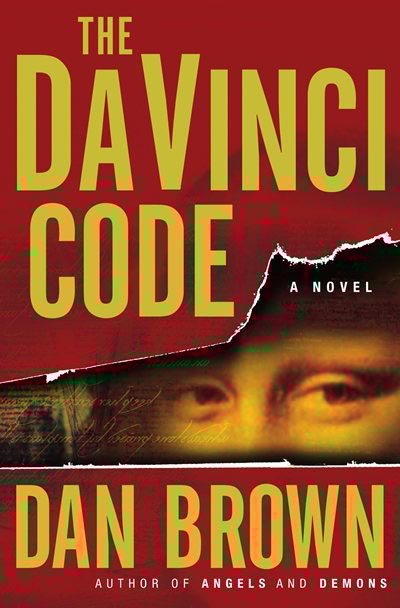
There is a phenomenon going on that was started by Dan Brown when his book 'The DaVinci Code' was published. Critics and readers praised the book to no end as a smart, engaging thriller. It's conspiracy theory became an institution unto itself as other authors released more literature about it. One browsing for the DaVinci Code could become easily confused as there were other books about the subject called Unlocking DaVinci's Code: Mystery or Conspiracy?, Cracking the DaVinci Code, and Exposing the DaVinci Code just to name a few.

I kind of felt I was missing out on the whole bandwagon and I wanted to see what all the fuss was about. I heard from most of my friends that I wouldn't like it as far as the prose was concerned, but the story was somewhat fun. Well they were right.

I read 'Holy Blood, Holy Grail', of which DaVinci Code is based on, as a young lad, probably too young to understand it, but found it rather dull. Still I picked up the DaVinci Code hoping for at least a 'smart, engaging thriller.' Well the book was hardly that smart, but it was somewhat entertaining.

The prose is simple, the pacing is annoying, and the characters are mostly uninteresting. The plot devices are less clever than the author (and sometimes audience) think, but it's engaging enough to keep you reading. While you may roll your eyes at the silly code breaking sequences and ludicrous theory it's still a fun romp. Any reasonably intelligent individual would see the answers to the puzzles a mile away and the big revelations are anything but surprising, but they'll keep reading to hopefully come across one that'll really challenge them.

As I read it I couldn't help but think why this book is such a huge success. I mean seriously it's not great nor is it even that good. Looking back at times when I would listen in on conversations about the book I find myself realizing exactly why people love it.

People love conspiracy theories and the book makes them feel smart.

The book is littered with all sorts of historical references, some of which are in tune with the story and some are, well, not. You find all sorts of tidbits of information, such as the real meaning behind giving someone bunny ears in a photo, and you feel like you've learned something. Even though the story is fiction the author outlines the material in such a way that you feel the references to ancient religions are true, although I believe most readers made no effort to look it up and confirm it.

I have a friend who actually believed the book's theory. Seriously he bought the idea that Jesus survived the crucifixion and has a bloodline that he started with Mary Magdalene. Although he made no effort to look up any of the references he accepted the idea and became an armchair expert in the field. Another friend who heard the theory before reading the book challenged my Catholic upbringing with this pearl of wisdom:

Him: Did you hear they found evidence of Jesus marrying Mary Magdalene?

Me: Yes I've heard about it.

Him: So isn't crap that the Catholic church doesn't allow priests to marry?

Me: Well since no one has found any evidence of either of the two even existing, much less procreating, I cry bullshit at anyone who believes in such a theory. Besides it's not like the Vatican is forcing people into the priesthood. People make choices. If you want to get married don't become a priest, monk, etc.

He looked away, paused for a long time, and said "yeah but..." which normally means he has nothing to counter with, but I guess he still feels compelled to crusade for a priest's right to matrimony.

Conspiracy theories are popular, because a lot of times they're easier to accept than the truth or even conventional wisdom. It can be simpler to digest the idea that the government was behind 9/11 than a bunch of fanatics carrying out a plot that beguiled our intelligence. By that same logic people will find it easier to believe that Christ was simply a man and not a divine being sent by a supreme intelligence. I can understand why the public will hold such theories as I am a fan of them myself, but to accept them as cardinal truth simply by reading grocery store fiction is just mind boggling. They succumb to be exactly like the people they look down upon which is those who accept scripture.

After finally finishing the book I do understand it's success. Books, like film, can live or die on their subject matter and marketing alone, quality be damned. That being said it's an easy, fun little read and if your expectations are low then you'll enjoy this novel.

No I haven't seen the movie yet.

"Though the book has apparently entertained about a quarter of the world’s population, it’s nothing more than a slim, overcomplicated premise supported by characters that are about as three-dimensional as the guests at Charles Grodin’s “party” in The Lonely Guy and dressed up in overheated prose that makes Dean Koontz look like Gore Vidal." - Jeremy C. Fox